Updated
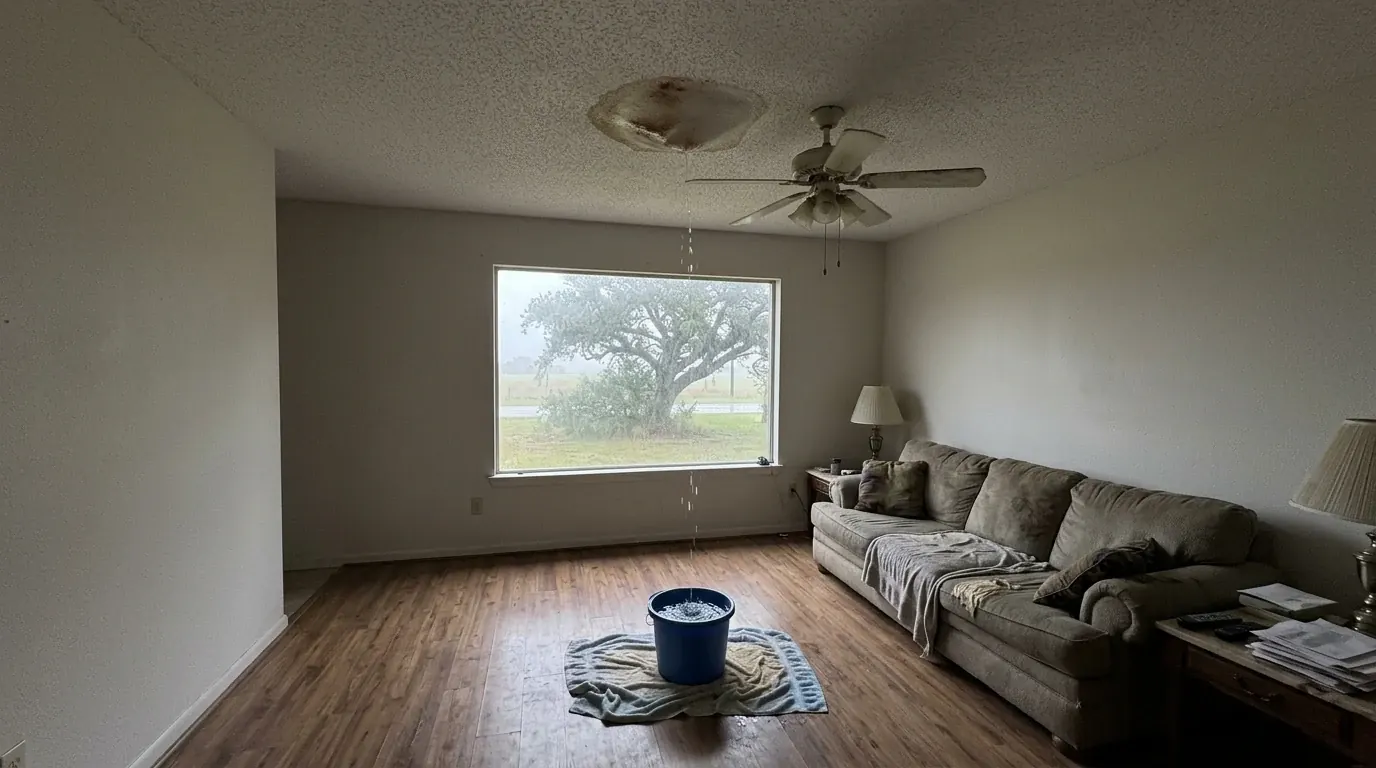
If the stain showed up during or right after rain, the roof is the most likely cause. If it appears on hot, dry days, check the AC unit in the attic or a water pipe first. Either way, don't leave it: a stain means water has already soaked through the drywall, and a roof leak usually gets bigger with every storm.
Is it the roof, the AC or a pipe?
When the stain appears tells you more than where it is. Think back to what the weather was doing.
- Shows up during or after rain, worse in heavy or windy rain: almost always the roof.
- Shows up on hot days when the AC runs hard, near the AC unit or a ceiling vent: most likely the AC drain line.
- Damp any time, below a bathroom, or your water bill went up: most likely a plumbing pipe.
- Small damp spots around the ceiling vents on muggy days: often moisture forming on cold ducts or vents (condensation), not a leak.
- Downstairs ceiling in a two-story house: usually plumbing from the floor above. The exception is a room under a lower section of roof, or a stain along an outside wall where a lower roof meets the upper wall.
Could it be the AC unit in the attic?
Yes, and it fools a lot of people. If your AC unit sits in the attic, it pulls water out of our humid air all summer, and that water drains away through a small pipe. When the pipe clogs, the pan under the unit fills up and spills onto the ceiling. Building code (the 2015 residential code Baytown uses) requires a backup: a second pan or an overflow pipe that drains somewhere you will notice it, or a switch that shuts the AC off when the pan fills. So if you see water dripping from a small pipe over a window or under the eaves, your main AC drain is probably clogged. That's a job for an AC technician, not a roofer. Older homes may not have the backup at all, which is one more reason to look in the attic before you blame the roof.
Is a water stain on the ceiling serious?
A small, dry stain that hasn't changed in months is not an emergency, but the cause still needs finding. These signs mean act now:
- The ceiling is soft, sagging or bulging
- The stain is bigger after each rain
- It is dripping, or the paint is bubbling
- There is a musty smell in the room or the attic
- The stain is around a light fixture
Look at the edge of the stain too. Each brown ring is usually a separate time the drywall got wet and dried out, so several rings mean the leak has been going on for a while. Wet drywall and insulation can grow mold. The EPA says to dry water-damaged areas within 24 to 48 hours to prevent it.
What if water is coming through a light fixture?
Turn off that circuit at the breaker before anything else, and don't use the switch. Water often collects in the ceiling above a light because the fixture box is a hole in the drywall where it can drain through. Leave the fixture off until it is completely dry, and have an electrician check it if the wiring got wet. Then find the source of the water, which after rain is usually the roof.
What should I do today?
- Take photos. Photograph the stain with the date showing. Your insurance company may ask for them.
- Mark the edge. Trace around the stain lightly with a pencil and write the date next to it. After the next rain you'll know for sure whether it is growing.
- If the ceiling is bulging with water, put a bucket under it and poke a small hole at the lowest point with a screwdriver, standing to one side. The water drains into the bucket instead of bringing down a piece of ceiling. If there is a light in that spot, turn off the power first.
- Look in the attic. Check the AC unit and its pan, then the wood above the stain. Our guide on how to find a roof leak walks you through it.
- Dry it out. Pull back wet insulation, run fans and keep the AC on to bring the moisture down.
Can I paint over a water stain on the ceiling?
Not yet. Fix the cause first, then let the drywall dry completely, which can take several days. Regular ceiling paint won't cover a water stain; the brown bleeds back through. Use a stain-blocking primer first, then paint. If the drywall is soft or crumbles when you press it, that piece needs cutting out and replacing. And painting over a stain before the leak is fixed only hides whether it is still growing.
Will insurance pay for a ceiling stain?
It depends on the cause. Most Texas policies cover sudden damage, like a storm tearing off shingles, but not a slow leak or wear and tear. Our post on whether insurance covers a roof leak in Texas explains the rules, the Gulf Coast wind gap and the claim deadlines.
Who should I call about a water stain on the ceiling?
If it came with the rain, call a roofer. If it is under the AC unit or appears on dry days, call an AC technician or a plumber. Not sure? Call us and tell us when you first saw it and what the weather was doing. If it sounds like an AC drain or a pipe, we'll say so. If it is the roof, roof leak repair explains how we track it down and fix it, and if water is coming in right now, see emergency roof repair.
More answers: What is the 25% rule for roofing? · Does home insurance cover a roof leak in Texas? · How do you know if a roofer is good? · How do I find where my roof is leaking? · How do I tarp a roof after a storm?. Or go back to roof repair in Baytown.