Updated
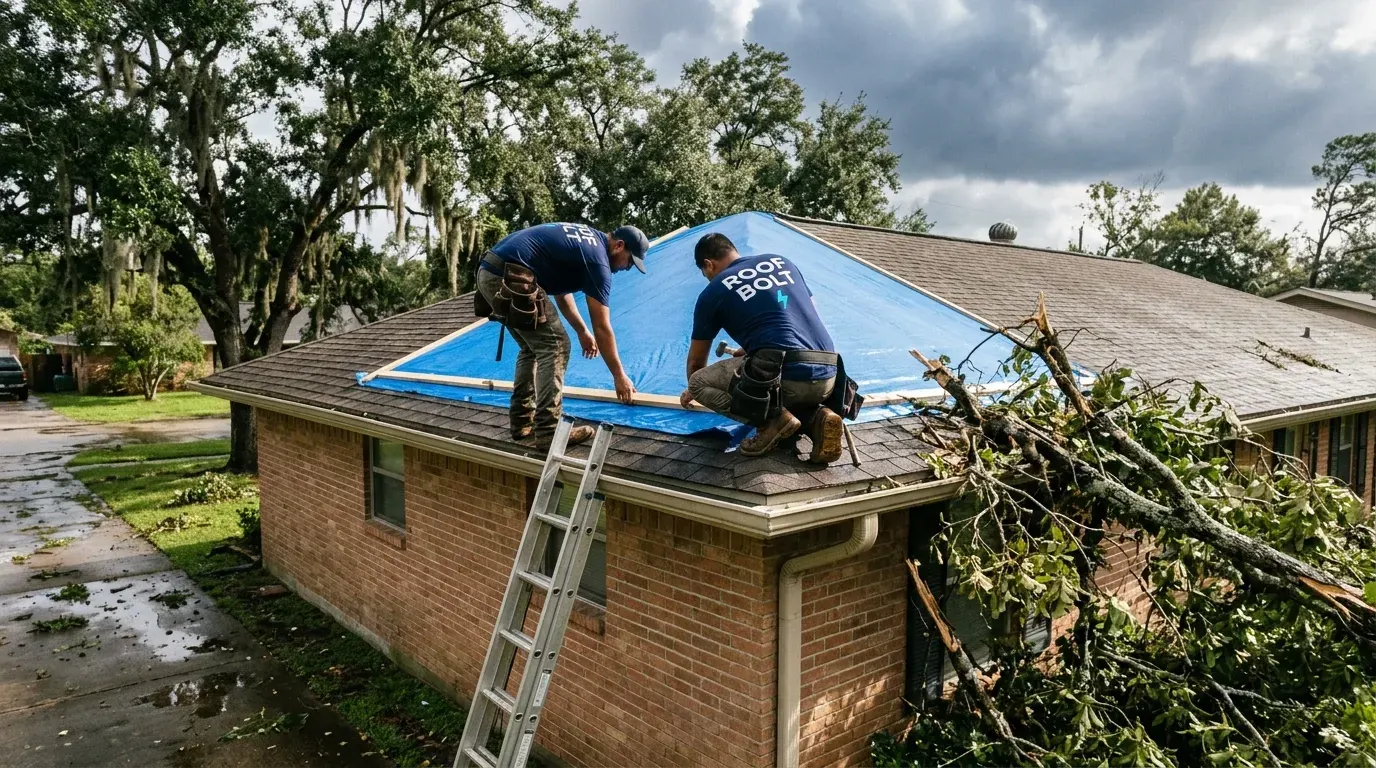
Cover the damaged area with a heavy-duty tarp that runs from below the damage up and over the ridge. Roll the edges around wooden boards and screw the boards down, so rain runs over the tarp instead of under it. Only do it yourself on a low, dry, one-story roof, with no wind and someone to help. Anything else is safer left to a roofer.
Should I tarp the roof myself?
Covering a damaged roof quickly is the right move. After Hurricane Beryl, Texas A&M AgriLife listed covering holes in the roof with plastic or a tarp among the first recovery steps. But falls are the real danger. U.S. emergency rooms treat well over 100,000 ladder injuries a year. Don't go up if any of these are true:
- The roof is still wet, or the wind is still blowing
- The roof is steep or two stories high
- Any part of the roof sags or feels soft
- Power lines are down near the house
- It is getting dark
If you do use a ladder, set it on firm, level ground, about 1 foot out from the wall for every 4 feet of height, and make sure it reaches at least 3 feet above the roof edge so you have something to hold as you step on and off.
What do I need to tarp a roof?
- A heavy-duty, UV-treated tarp big enough to cover the damage, reach over the ridge and run several feet past the damage on each side. Thin blue tarps tear and fade fast in our sun.
- 2x4 boards, at least as long as the tarp is wide
- Exterior screws long enough to go through the board and the tarp into the roof, and a cordless drill
- A sturdy ladder and a helper
- Gloves and shoes with soft rubber soles
- A tape measure and a utility knife
How do I tarp a roof, step by step?
- Take photos first. Photograph the damage from the ground, and up close if it is safe. Your insurance company will want to see it before it is covered.
- Clear the area. Push off loose branches and broken pieces of shingle so the tarp lies flat.
- Measure. The tarp should start below the damage and run up and over the ridge. Water can't run under a top edge that sits on the far side of the ridge.
- Fix the top edge. Roll the top edge of the tarp around a 2x4 two or three times and screw the board down on the far side of the ridge, every couple of feet.
- Pull it smooth. Stretch the tarp down over the damage so there are no folds or pockets that can hold water.
- Fix the bottom edge. Roll the bottom edge around a second board and screw it down near the roof edge.
- Fix the sides. Screw boards along both sides, on top of the tarp, so the wind can't get under it.
- Check it from the ground. The tarp should be tight and flat, with water able to run straight off the roof.
If the damage is too far from the ridge to reach it, the top edge becomes the weak spot. That is a job for a roofer, who can slide it under the shingles above so water can't get behind it.
Can I put a tarp on a roof without nails or screws?
For a light rain on a calm day, sandbags or weights along the edges can hold a tarp for a short time. They won't hold in a real storm wind. This area gets strong gusts: Beryl brought gusts of 74 mph at La Porte, and the May 2024 derecho knocked down trees and power lines all over Baytown. Boards screwed down through the tarp are what keeps it on in that kind of wind. The small screw holes get sealed when the roof is repaired. Don't nail through the bare edge of the tarp: the wind rips the plastic at each nail hole, and then it leaks.
How long can a tarp stay on a roof?
Think weeks, not months. The sun breaks down the plastic, the wind works the edges loose, and water can collect in any sag. Check the tarp from the ground after every storm, and get the real repair booked as soon as the roof is dry. After Beryl, many homeowners in the Houston area lived under tarps for a long time while they waited on insurance and roofers. The longer a tarp stays, the more chance water finds its way under it.
Does the government help with roof tarps after a hurricane?
Sometimes. After some federally declared disasters, the U.S. Army Corps of Engineers runs Operation Blue Roof, which gives eligible homeowners reinforced sheeting at no charge to cover damaged roofs. It only runs when it is turned on for a specific disaster, so watch for local announcements.
Don't sign anything in exchange for a tarp
After big storms, door-knockers sometimes offer a quick tarp if you sign an agreement that gives them a say over your insurance claim, and homeowners have reported lien threats afterwards. Read anything before you sign it. In Texas, a contractor may not offer to waive your deductible, and after a disaster an out-of-town contractor may not ask for a down payment before starting work. More on this in how to know if a roofer is good.
Will insurance pay for tarping?
Your policy expects you to stop the damage from getting worse, and a tarp is how you do that. Keep the receipts for the tarp, boards and any help you paid for, and give them to your insurance company with your claim. Whether the policy pays depends on what caused the damage and on your coverage. See does insurance cover a roof leak in Texas.
What happens after the tarp?
A tarp stops the water; it doesn't fix anything. Once the roof is dry, the damage underneath needs a real repair: torn or missing shingles, lifted flashing, a cracked pipe boot or, if water got in for a while, soft decking. See storm damage roof repair and shingle repair. If water is coming in right now, see emergency roof repair.
More answers: What is the 25% rule for roofing? · Does home insurance cover a roof leak in Texas? · How do you know if a roofer is good? · How do I find where my roof is leaking? · Water stain on the ceiling after rain: is it the roof?. Or go back to roof repair in Baytown.