Updated
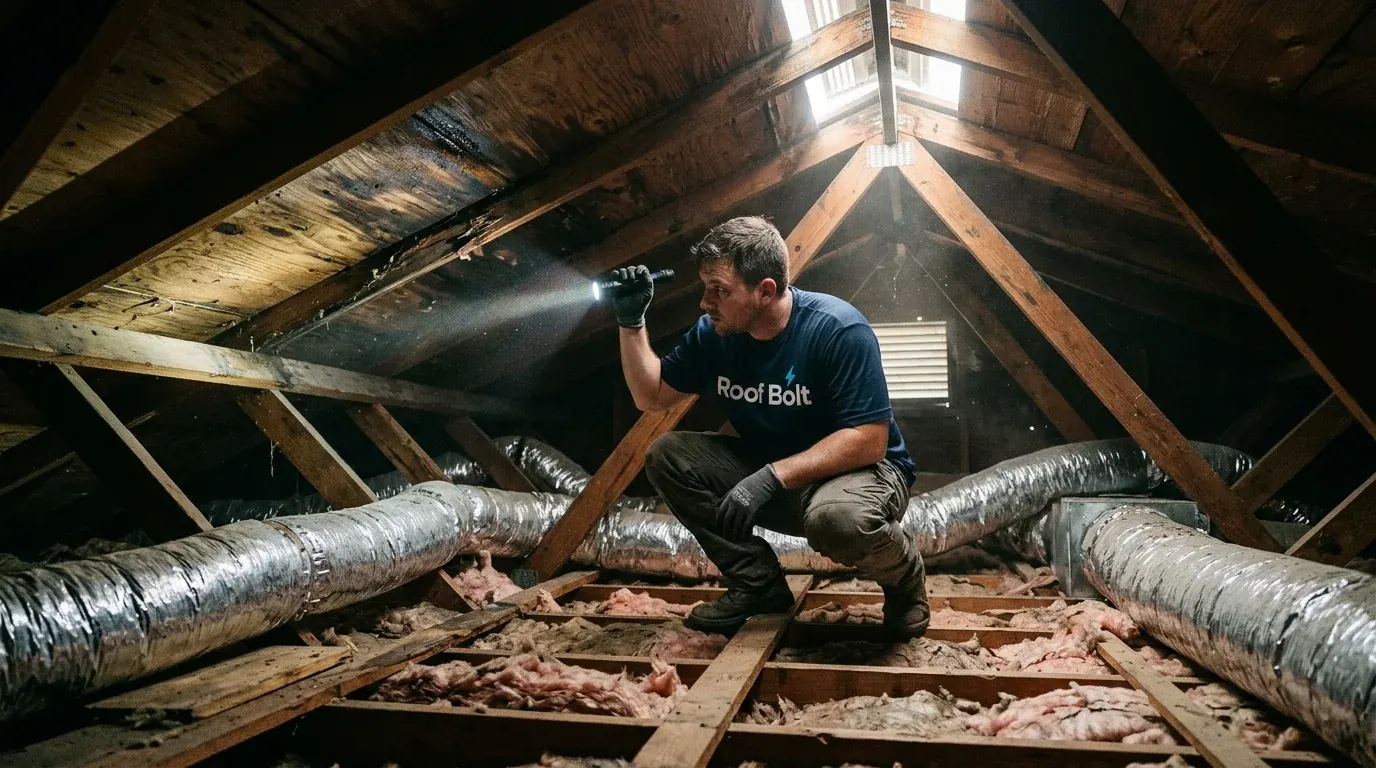
Start inside, not on the roof. Note where the wet spot is, then go into the attic on a dry day with a flashlight and follow the water marks on the wood uphill. The spot where water gets in is usually a few feet higher than the stain, and most often it is a pipe boot, a vent, the flashing around a chimney or wall, or a valley.
Why isn't the leak right above the stain?
Water rarely drops straight down. It comes in through a gap, lands on the wood under the shingles, and runs along a rafter, a pipe or the top of the insulation until it finds a low point. Only then does it soak into the ceiling. That trip can be a few inches or several feet. It is the main reason a patch put on right above the stain so often doesn't stop the leak.
How do I find a roof leak from the attic?
This is the best place to look, and you don't have to climb on the roof to do it. Go on a dry day, and in the morning if you can. The Houston area sees about 100 days a year at 90 degrees or hotter, and an attic gets far hotter than the air outside.
- Measure first. Inside the room, measure from the stain to the nearest outside wall. That helps you find the same spot from above.
- Step only on the wood framing. The ceiling between the beams is just drywall and won't hold you. Wear long sleeves and a dust mask for the insulation.
- Look above the stain. You are looking for wet or flattened insulation, dark rings on the wood, or a white or brown water trail.
- Follow the trail uphill. Water runs down the slope, so the entry point is higher up the roof than the wet spot.
- Check everything that goes through the roof. Plumbing pipes, vents, the chimney and any skylight. Most leaks start around one of them.
- Look for daylight. Turn off your flashlight for a moment. Light coming through anywhere other than a vent is a gap water can use.
- Mark it and take a photo. A strip of tape or a chalk mark and a phone photo make the repair faster, whoever does it.
One thing that fools people: if nail tips all over the attic are rusty or wet, that usually points to moisture from poor attic airflow, not to one leak. And if the wet spot is near the AC unit, read is the ceiling stain from the roof? before you go looking at the roof.
What if I don't have an attic?
Many flat roofs, mobile homes and rooms with vaulted ceilings have no attic space to look in. Then you have to work from the outside, and the leak is harder to pin down. On a flat roof, water can travel a long way under the top layer before it shows inside, so the spot on the ceiling may be far from the actual hole. In these cases a roofer usually has to check the roof surface itself. See flat roof repair and mobile home roof repair.
What can I check from the ground?
You can spot a lot without a ladder. Stand back in the yard with binoculars or zoom in with your phone camera, and look at the part of the roof above the leak and uphill from it.
- Missing shingles, or shingles that are lifted, curled or creased
- A cracked rubber collar around a pipe sticking out of the roof
- Rusty, bent or lifted metal where the roof meets a chimney or a wall
- Leaves and branches piled up where two roof slopes meet
- Lots of shingle grit in the gutters or at the bottom of a downspout
If you can't see anything wrong from the ground, leave the climbing to a roofer. A wet or storm-damaged roof is slippery, and the weak spots don't show from above.
Can I find a roof leak with a garden hose?
Yes. It is how roofers test a leak they can't see. Only try it yourself on a single-story roof with a gentle slope, on a dry day, with someone holding the ladder. It takes two people: one in the attic with a flashlight, one with the hose on the roof. Start low, below the area you suspect, and soak one small section for several minutes. Then move a little higher and repeat. When the person in the attic sees water, you have found the section. Two warnings. Spray down the roof the way rain falls, never up under the shingles, or you can push water in where rain never would. And some leaks only show up in wind-driven rain, so a hose test can come up empty even when the leak is real.
Where do roof leaks usually start?
- Pipe boots and vents. The rubber collar around a plumbing pipe dries out in the sun and cracks, and water runs down the pipe. It is one of the most common roof leaks of all. See pipe boot and vent repair.
- Flashing. The metal at chimneys, walls and skylights lifts, rusts or loses its seal. See roof flashing repair.
- Valleys. Where two slopes meet, the roof carries the most water, and leaves pile up there. See valley repair.
- Missing or damaged shingles. Wind lifts and tears them, and hail cracks them. See shingle repair.
- Soft decking. If the wood under the shingles feels soft or sags, the leak has been running a while. See roof decking repair.
Baytown gets about 65 inches of rain in a normal year, so even a small gap gets plenty of chances to grow.
When should I stop looking and call a roofer?
- The ceiling sags, bulges or feels soft. Stay out from under it.
- Water is dripping near a light or an outlet. Turn off that circuit at the breaker if you can do it safely.
- You checked the attic and still can't find where it comes in.
- The roof is steep, two stories high, or still wet.
For water coming in right now, see emergency roof repair. For everything else, roof leak repair explains how we track a leak to its source and fix that spot.
More answers: What is the 25% rule for roofing? · Does home insurance cover a roof leak in Texas? · How do you know if a roofer is good? · Water stain on the ceiling after rain: is it the roof? · How do I tarp a roof after a storm?. Or go back to roof repair in Baytown.